

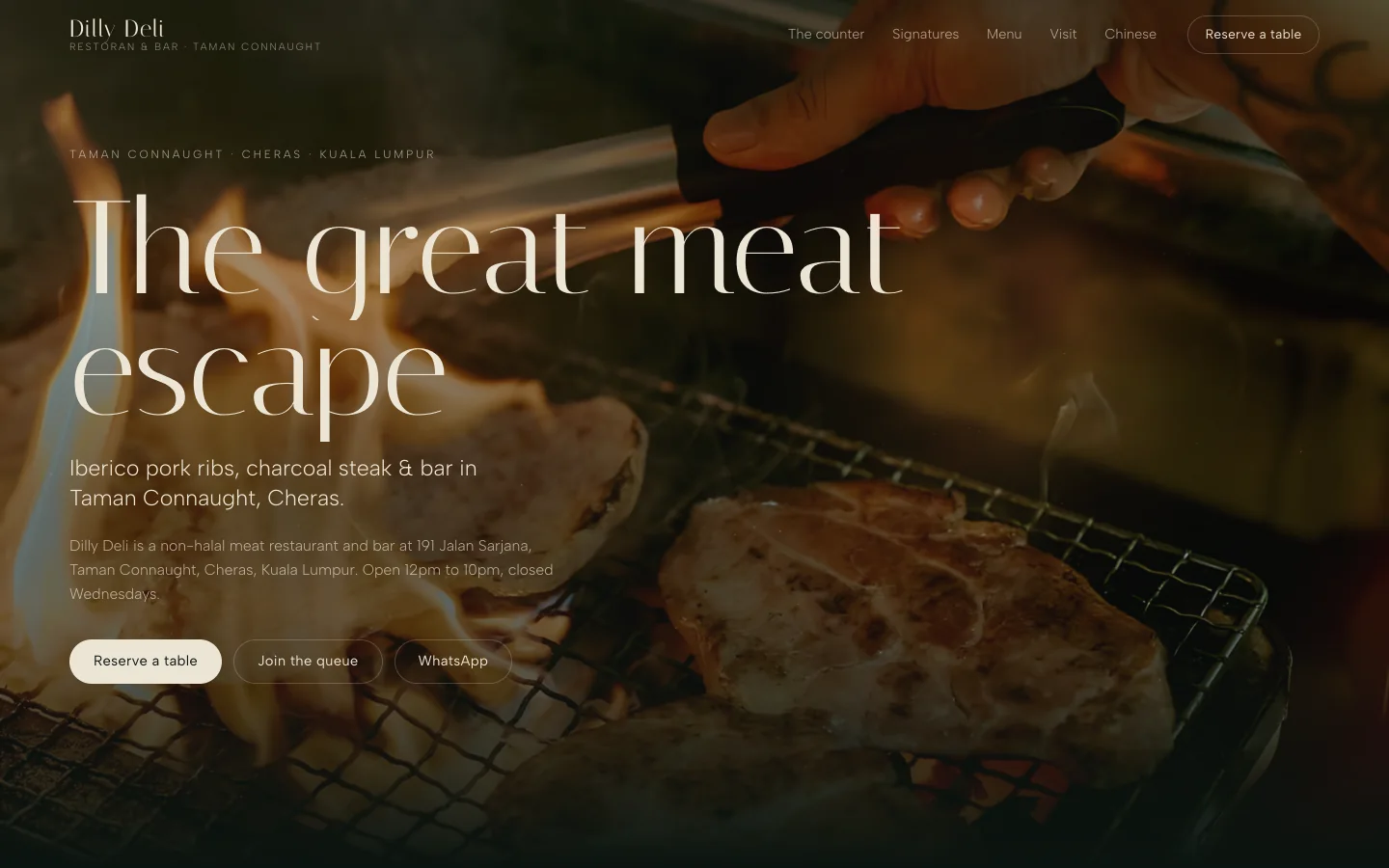
Dilly Deli
A shop with catalogue, cart, checkout, pickup, delivery and chilled shipping, plus a console for orders, products, stock, customers and reports. Built, and not yet switched on; the restaurant site in front of it is live.
A retail shop website from CodaMinds is an online store for a shop with a counter: your own address beside the marketplaces, one stock count shared by the counter and the site, pickup in store or delivery, and a stamp card that works in both places. It runs in English, 中文 and Bahasa Melayu, and we run it after launch.
Steven Lim started the studio in Kuala Lumpur in 2021 and has built apps and websites since 2016. We built a full shop and operator console for a restaurant, and we run our own platform with a digital stamp card, so we know what a shop needs once real customers rely on it. The person you message is the person who builds your store, in English, 中文 or Bahasa Melayu. We meet shop owners in person across the Klang Valley, and work with shops in the rest of Malaysia, Singapore and further abroad over WhatsApp and a shared draft link.
A shop that only sells online starts from the website. A shop with a counter starts from the floor: the stock on the shelf, the regulars who walk in, the staff at the till. The website has to fit around that, not beside it. When it does not, the same problems show up in every shop: an item sold online that was already sold at the counter, an order taken by message and forgotten, a marketplace that owns the customer, and a loyalty card in a drawer. Five things fix that. For the full list of what an online shop includes, see online shops; this page is about the shop that also has a door.
Marketplaces bring buyers you would not reach alone, and they take a fee on each sale and keep the customer. They are a channel, not your shop. Your own store sits on your own address, with your catalogue, your prices and your rules for pickup and delivery. The customer's details and order history stay with you, with their consent, so a buyer who found you on a marketplace and later walked into the shop can be the same customer in your records. The marketplace listings keep running beside it. The store also says plainly that this is your official shop, which matters when fake pages copy a brand's name and photos.
Stock counted twice is stock sold twice. In the console, each product has one count. A sale at the counter, an online order and a marketplace order you record all take from the same number, so the site stops selling an item when the last one leaves the shelf. Several branches can each keep their own count, with the owner seeing all of them, and a customer online sees which branch has the item for pickup. When new stock arrives, it is received once in the console and appears on the site and at the counter together. If your shop is part of a group, e-invoicing can apply even below the turnover threshold; see e-invoice integration in Malaysia.
Pickup is the reason a customer near your shop orders from you and not from a warehouse across the country. The customer picks the branch and a pickup time, pays online, and the order waits at the counter with their name on it. Staff see the pickup list for the day and mark each one collected. Delivery and shipping each get their own rules: the areas you cover, the order cut-off time and the items that cannot be shipped. Customers see only the options that work for their order.
A paper stamp card gets lost, and a big-chain loyalty app is more than a corner shop needs. A digital stamp card lives on the customer's phone. Staff add a stamp at the counter by scanning the card, the site adds one for an online order, and the reward is claimed in either place. You set the rule: a stamp per visit, per amount spent or per item. The console shows who your returning customers are, so a new arrival or a restock can be sent to the people who asked for it, not to everyone.
Many shops serve customers who read 中文 at home, Bahasa Melayu at work and English on the label. Each language is a real set of pages with its own address, so a customer who searches in Bahasa Melayu finds the Bahasa Melayu product page. Product names and descriptions are translated once in the console. Staff can run the console in one language while customers shop in another.
Two products carry the pieces a retail store needs, and a third runs the payments behind them.
A shop with catalogue, cart, checkout, pickup, delivery and chilled shipping, plus a console for orders, products, stock, customers and reports. Built, and not yet switched on; the restaurant site in front of it is live.
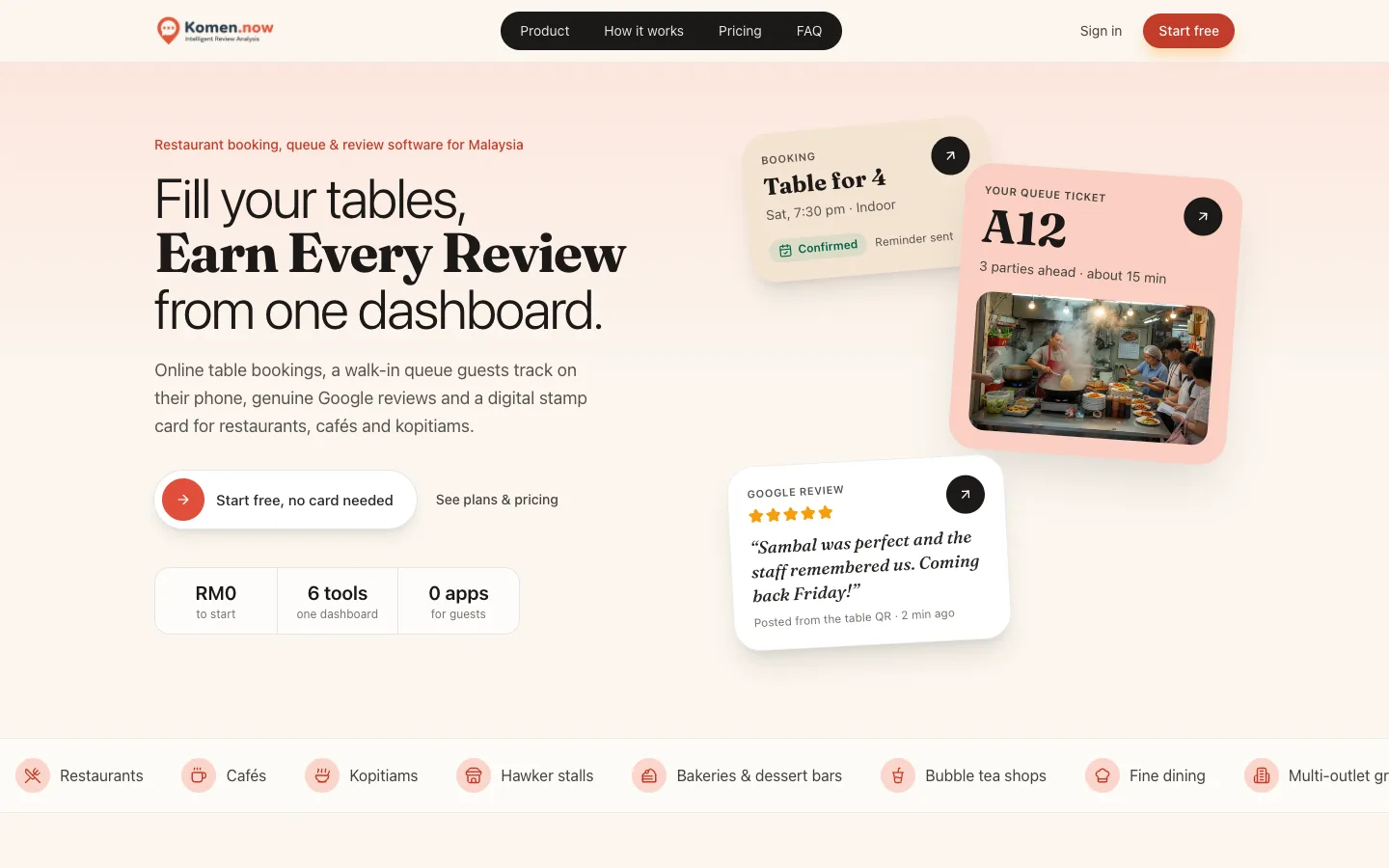
Our own platform with a digital stamp card, bookings and reviews, run from one dashboard with staff roles. The stamp card works the same way at a shop counter.

Runs card payments, refunds and payouts every day, which is the machinery a checkout needs behind it.
Brief. You tell us what you sell, how many branches you have, how the counter records sales today and which marketplaces you use. We reply with questions and a written scope.
Fixed quote. One price for that scope, agreed before any work starts. Anything outside it is quoted first.
Draft on your phone. You open the draft link, order for pickup as a customer would, ring up a sale at the counter as staff would, and check that the stock moved in both places. We revise until you sign off.
Launch. We put the store live on your domain, with hosting in the shop's name, move your catalogue in, and hand over every file, the console included.
Care after launch. A new branch, a new range, a festive promotion or a change to delivery areas is a message away, each quoted before it starts. See website maintenance.
Yes, as well as, not instead of. Marketplaces bring new buyers and take a fee on each sale; your own store keeps the customer and their order history with you, with their consent, and shows plainly where your official shop is. The marketplace listings keep running beside it.
Yes. Each product has one count in the console. Counter sales, online orders and the marketplace orders you record all take from it, so the site stops selling an item when the last one is sold. Each branch can keep its own count, and the owner sees every branch in one place.
Yes. The customer picks the branch and a pickup time and pays online, and the order waits at the counter with their name on it. Staff see the day's pickup list and mark each order collected. Delivery and shipping run on their own rules, so customers see only the options that suit their order.
Yes. The stamp card lives on the customer's phone. Staff add a stamp at the counter by scanning it, an online order adds one on its own, and the reward can be claimed in either place. You set the rule, per visit, per amount or per item. We run a digital stamp card on our own platform, Komen.now.
We built the Dilly Deli shop and console: catalogue, cart, checkout, pickup, delivery, chilled shipping, card payments, refunds and a console for orders, stock and customers. It is built and not yet switched on. A retail store adds the counter, the shared stock count and the stamp card, which we quote in your scope.
Yes. English, 中文 and Bahasa Melayu in any combination, each a real set of pages on its own address that search engines can find, not a translation widget. Product names and descriptions are translated once in the console, and staff can run the console in a different language from the one customers shop in.
Send us what you sell, the branches, how the counter records sales today and where you sell online. Tap the button to message us on WhatsApp and get a fixed quote for your shop website.
WhatsApp us