

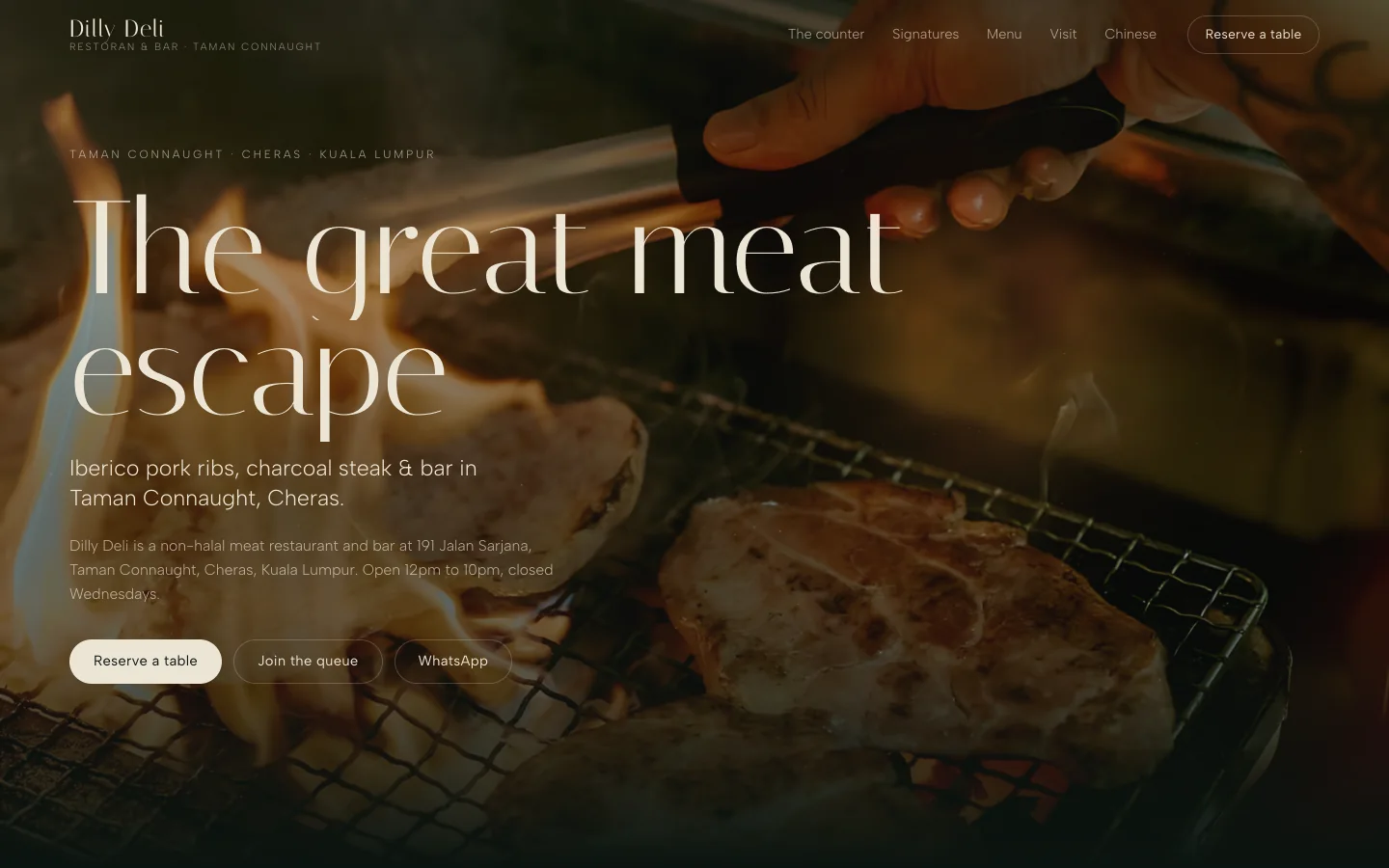
Dilly Deli
An online shop and console for a restaurant in Cheras, with card payments, refunds, order emails and sales reports, built and not yet switched on.
e-Invoice integration from CodaMinds connects your own ordering, booking, shop or clinic system to LHDN MyInvois. Each sale records what an e-invoice needs, consolidated or individual e-invoices are raised from those records, a customer can ask for their own from the receipt, and the validated result is kept with the order. Your accountant decides what applies; we build it.
Steven Lim started the studio in Kuala Lumpur in 2021 and has built apps and websites since 2016. We run a live product of our own that takes payments and issues refunds every day, so we know what a sale record has to hold. The person you message is the person who builds your integration, in English, 中文 or Bahasa Melayu. We meet clients in person across the Klang Valley, and work with businesses in the rest of Malaysia, Singapore and further abroad over WhatsApp and a shared draft link.
The rules sit in LHDN's e-Invoice Guideline, version 4.8, published on 30 August 2026. Five points shape what your system has to do. This is a summary, not advice on your own position.
Who is exempt. Clause 1.6.1(e) exempts taxpayers with an annual turnover or revenue of less than RM3,000,000, LHDN's published figure in version 4.8.
The related-company rule. Clause 1.6.10 removes that exemption where the business has a non-individual shareholder, a holding company, or a related company or joint venture with a turnover at or above RM3,000,000. A small outlet, branch or clinic inside a larger group can therefore fall inside e-invoicing even when its own sales are low.
The relaxation period and when penalties start. The last phase in the guideline's timeline covers businesses with a turnover of up to RM5,000,000, starting 1 January 2026. The government has extended its relaxation period to 31 December 2027, with penalties from 1 January 2028. During that period a business may issue a consolidated e-invoice for each month instead of one for every transaction.
The single-invoice rule. LHDN's e-Invoice Specific Guideline says any single transaction above RM10,000 needs its own individual e-invoice, even during the relaxation period. Corporate catering or a bulk order can cross that line.
Buyers can ask. A buyer who wants an individual e-invoice can request one through the supplier's web portal or app. That is a feature of your website or app, not of your accounting software.
So the work is not a tax question for us. It is a records question: does every sale carry what an e-invoice needs, and can your system produce the right kind when it is asked?
Every e-invoice is built from a sale that was recorded properly the first time. For each order, booking or treatment, the system keeps the date and time, the outlet or branch, each item with its quantity and price, the tax, the total, the payment method and a receipt number that never repeats. When a buyer wants their own e-invoice, it also keeps the buyer details LHDN asks for, such as the buyer's name, tax identification number and address. A refund is tied back to the sale it reverses, so nothing is adjusted by hand later. We list what your system is missing and add only that.
Most counter sales go to buyers who never ask for an e-invoice, and during the relaxation period those can go into one consolidated e-invoice for the month. A sale above RM10,000, or a sale where the buyer asked, needs an individual e-invoice instead. The system sorts each sale as it happens: it flags the large ones, marks the ones a buyer has claimed, and leaves the rest for the monthly run. A buyer's request that arrives after the sale moves that sale out of the consolidated pile, so it is never counted twice.
A QR on the printed receipt, or a link in the order email, opens a short form on your own site with the receipt number already filled in. The buyer adds their company details once, and a returning buyer finds them saved. Staff see the request against the order, with nothing to retype.
This is where we fit. We connect the system you run, whether we built it or not, to LHDN MyInvois: the consolidated e-invoice goes in at month end, individual ones go in as they are needed, and the result LHDN sends back is kept against the order. The buyer gets the e-invoice details with their receipt or by email. A rejected submission shows staff why, on the order, so they can fix it and resend.
Your accountant or tax agent decides whether you are in, which date applies to you, and how to treat a mixed group of outlets. We do not give tax advice. We build to what they confirm and show them test sales before anything goes live. A monthly report from the same records keeps the e-invoices and their books in step.
None of the products below is shown here as an e-invoice project. Each holds the records an e-invoice is built from: orders, payments, refunds and receipts that never repeat.
An online shop and console for a restaurant in Cheras, with card payments, refunds, order emails and sales reports, built and not yet switched on.
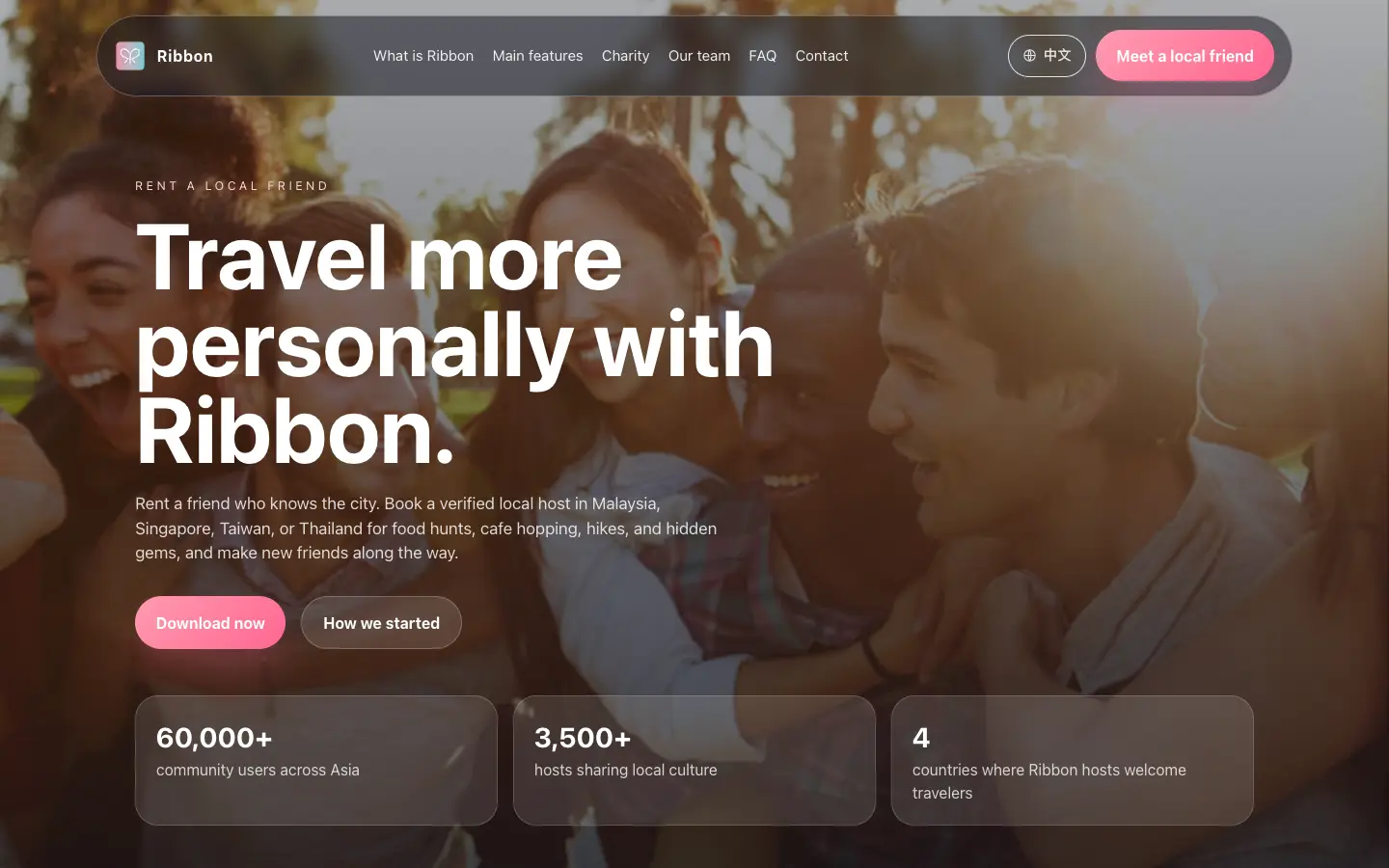
Payment at booking, refunds and host payouts, each tied to the booking it came from. We run it every day.
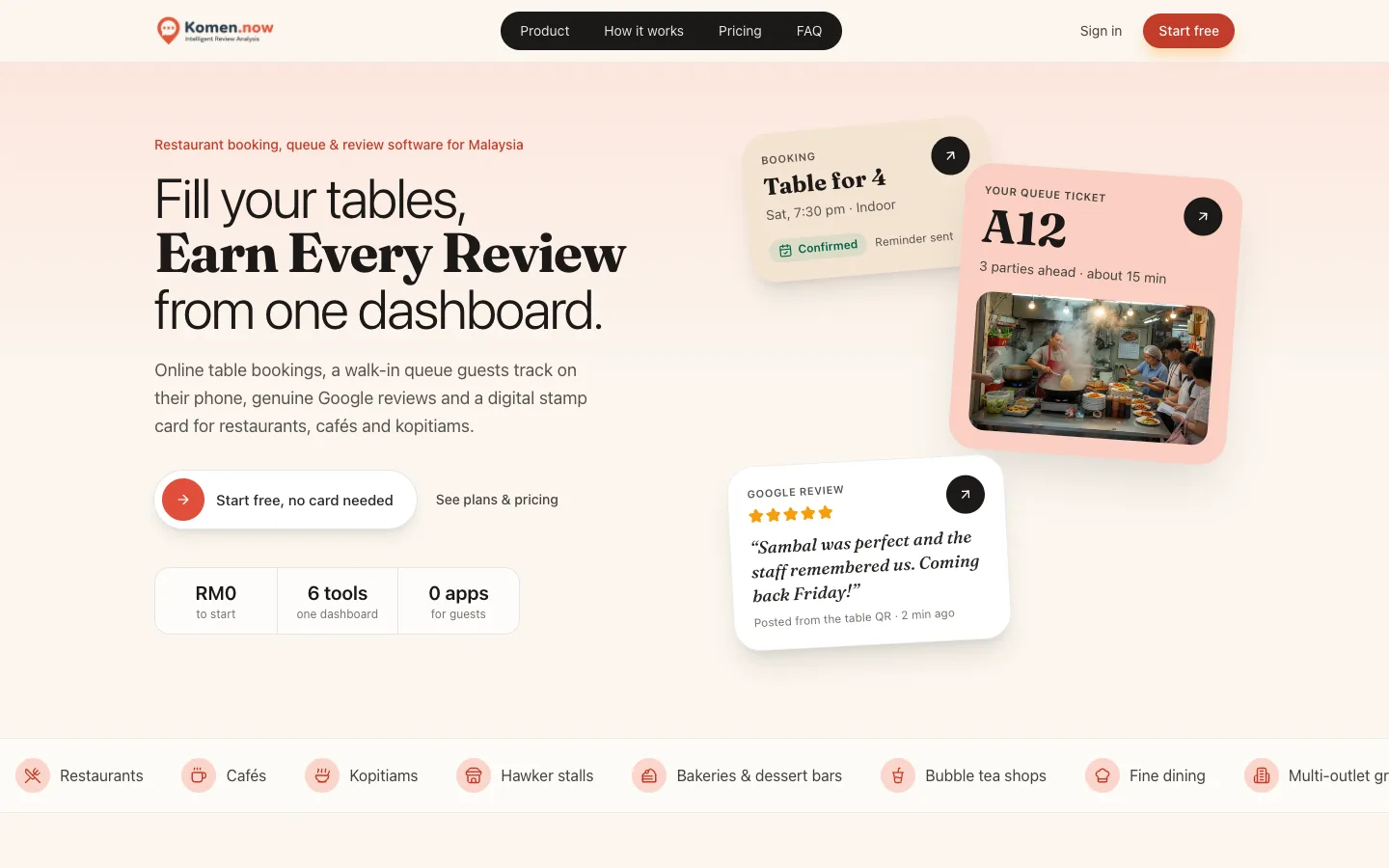
A table QR that opens a page for that outlet: the same pattern that takes a receipt QR to an e-invoice request form.
Brief. You tell us how you sell today, which system records each sale, and what your accountant has confirmed. We reply with a written list of what each sale has to capture.
Fixed quote. One price for the capture, the request form and the MyInvois connection in that list, agreed before work starts. Anything outside it is quoted first.
Draft on your phone. You run test sales, a refund and a buyer's request through the draft, in test mode, and check the results with your accountant. We revise until they match.
Launch. We switch the connection to live, with the MyInvois access in your business's name, and watch the first real submissions go through.
Care after launch. LHDN updates its guidelines and your outlets change. Updates are a message away, each quoted first. See website maintenance.
For payment gateways and other connections, see system integration.
Under clause 1.6.1(e) of LHDN's e-Invoice Guideline, version 4.8, a business below RM3,000,000 in annual turnover is exempt, but its business customers may still want an e-invoice for their own books. Your accountant confirms whether to issue them anyway. If you do, the request form and the MyInvois connection work the same way.
A consolidated e-invoice covers the month's sales to buyers who did not ask for their own. The relaxation period runs to 31 December 2027, and during it a business may issue one for each month instead of one per transaction. The system keeps every sale's details either way, so moving to individual e-invoices later is a setting, not a rebuild.
Yes. A QR on the receipt, or a link in the order email, opens a form on your own site with the receipt number filled in. The buyer adds their company details, and the individual e-invoice is submitted from the same record.
Under LHDN's e-Invoice Specific Guideline, yes: a single transaction above RM10,000 needs an individual e-invoice, even during the relaxation period. The system flags those sales as they happen and keeps them out of the consolidated run.
Usually, yes. We first check what your system records and whether other systems can read its sales. If it holds what an e-invoice needs, we connect it. If not, we say what is missing before quoting, and you decide whether to add it or move.
No. Your accountant or tax agent decides whether e-invoicing applies to you, from which date, and how to treat each company in a group. We build to what they confirm and show them the test e-invoices before launch.
Tell us how you take orders or bookings today and what your accountant has told you. Tap the button to message us on WhatsApp, and we reply with a list of what each sale must capture and a fixed quote.
WhatsApp us